

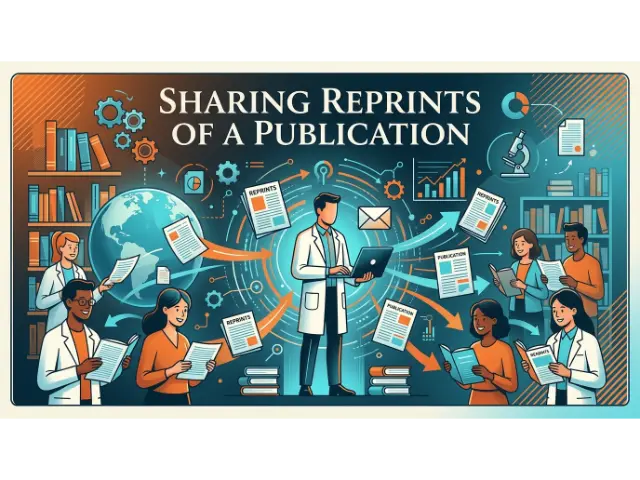
The answer to “Which author is normally responsible for sharing reprints of a publication with readers?” is the corresponding author. In academic publishing, the corresponding author serves as the primary point of contact between the research team, the journal, and readers after a paper has been published.
Although all authors contribute to the research, the corresponding author is typically responsible for handling requests for article reprints, answering questions about the study, and managing communication related to the publication.
What Is a Corresponding Author?
A corresponding author is the researcher designated to communicate with the journal throughout the submission, peer review, publication, and post-publication process. Their contact information is included in the published article so readers, editors, and researchers can easily reach them.
In addition to managing communication, the corresponding author often coordinates revisions, submits required documents, and ensures that all co-authors approve the final manuscript before publication.
Which Author Normally Shares Reprints With Readers?
Traditionally, the corresponding author is responsible for sharing reprints of a publication with readers who request copies. This responsibility continues after publication, making the corresponding author the official contact for distributing the article and responding to inquiries.
While many journals now provide digital access instead of printed reprints, readers still commonly contact the corresponding author when requesting copies that are not freely available.
What Are Reprints of a Publication?
Reprints are copies of a published research article that authors can distribute to colleagues, students, researchers, or professionals interested in their work. In the past, publishers often provided printed reprints that authors mailed to individuals upon request.
Today, reprints are usually shared electronically as authorized PDF files, publisher-generated links, or accepted manuscript versions, depending on the journal’s copyright and sharing policies.
Why Is the Corresponding Author Responsible?
The corresponding author serves as the official representative of the research team after publication. Since their email address appears in the journal article, readers know whom to contact for additional information, clarification, collaboration opportunities, or requests for reprints.
Having one designated contact also prevents confusion when multiple authors are involved and helps ensure consistent communication with readers and publishers.
Responsibilities of the Corresponding Author
The role of the corresponding author extends beyond simply sharing reprints. They remain responsible for several important publication-related tasks throughout the research process.
Common responsibilities include:
- Submitting the manuscript to the journal
- Communicating with journal editors
- Managing peer review responses
- Coordinating revisions with co-authors
- Obtaining final approval from all authors
- Handling publication correspondence
- Responding to reader questions
- Sharing article reprints when permitted
What About the First Author?
Many people confuse the first author with the corresponding author, but these roles are not always the same. The first author is generally the researcher who contributed most directly to the study, including conducting experiments, analyzing data, and preparing the initial manuscript.
The corresponding author, however, is chosen to manage communication before and after publication. In some papers, the same individual serves as both first author and corresponding author, while in others these responsibilities are divided.
Can Any Author Share a Published Paper?
Any co-author may share a publication if permitted by the journal’s copyright policy or open-access license. However, requests from readers are generally directed to the corresponding author because they are listed as the official contact for the publication.
Authors should always follow the publisher’s policies regarding article sharing, repository deposits, and distribution of PDF versions.
How Digital Publishing Has Changed Reprint Sharing
Modern academic publishing has significantly reduced the need for printed reprints. Many journals now provide electronic access, shareable article links, and institutional repositories that allow readers to obtain research more easily.
Even with these advances, the corresponding author remains responsible for responding to requests when readers cannot directly access the published article.
Why Reprints Are Still Important
Reprints continue to play an important role in scholarly communication, especially when articles are published behind subscription paywalls. Sharing authorized copies helps researchers, students, and professionals access scientific findings that may otherwise be unavailable.
Reprints also encourage collaboration, increase research visibility, and promote the wider dissemination of academic knowledge across institutions and disciplines.
Best Practices for Sharing Reprints
Authors should ensure that any shared copies comply with the publisher’s copyright agreement. When possible, using official article links, institutional repositories, or publisher-approved versions is the safest approach.
Maintaining accurate contact information also helps readers request publications and communicate with the research team efficiently.
Conclusion
The corresponding author is normally responsible for sharing reprints of a publication with readers. As the official contact for the research paper, they manage communication with journals, respond to inquiries, and distribute copies in accordance with the publisher’s copyright policies.
Although digital publishing has changed how research is shared, the corresponding author’s role remains essential for supporting scholarly communication and helping readers access published work.
Frequently Asked Questions
Which author is responsible for sharing reprints of a publication?
The corresponding author is typically responsible for sharing reprints and responding to reader requests after the article has been published.
What is the difference between the first author and the corresponding author?
The first author usually contributes most of the research and writing, while the corresponding author manages communication with the journal and readers before and after publication.
Are printed reprints still common?
Printed reprints are much less common today. Most journals and authors now share electronic versions, publisher links, or approved manuscript copies.
Can readers contact any author for a copy of a paper?
Yes, but readers usually contact the corresponding author because their contact information is listed in the published article as the primary point of communication.
Does the corresponding author always own the copyright?
No. Copyright ownership depends on the journal’s publishing agreement. Authors should follow the publisher’s policies when sharing reprints or digital copies.
